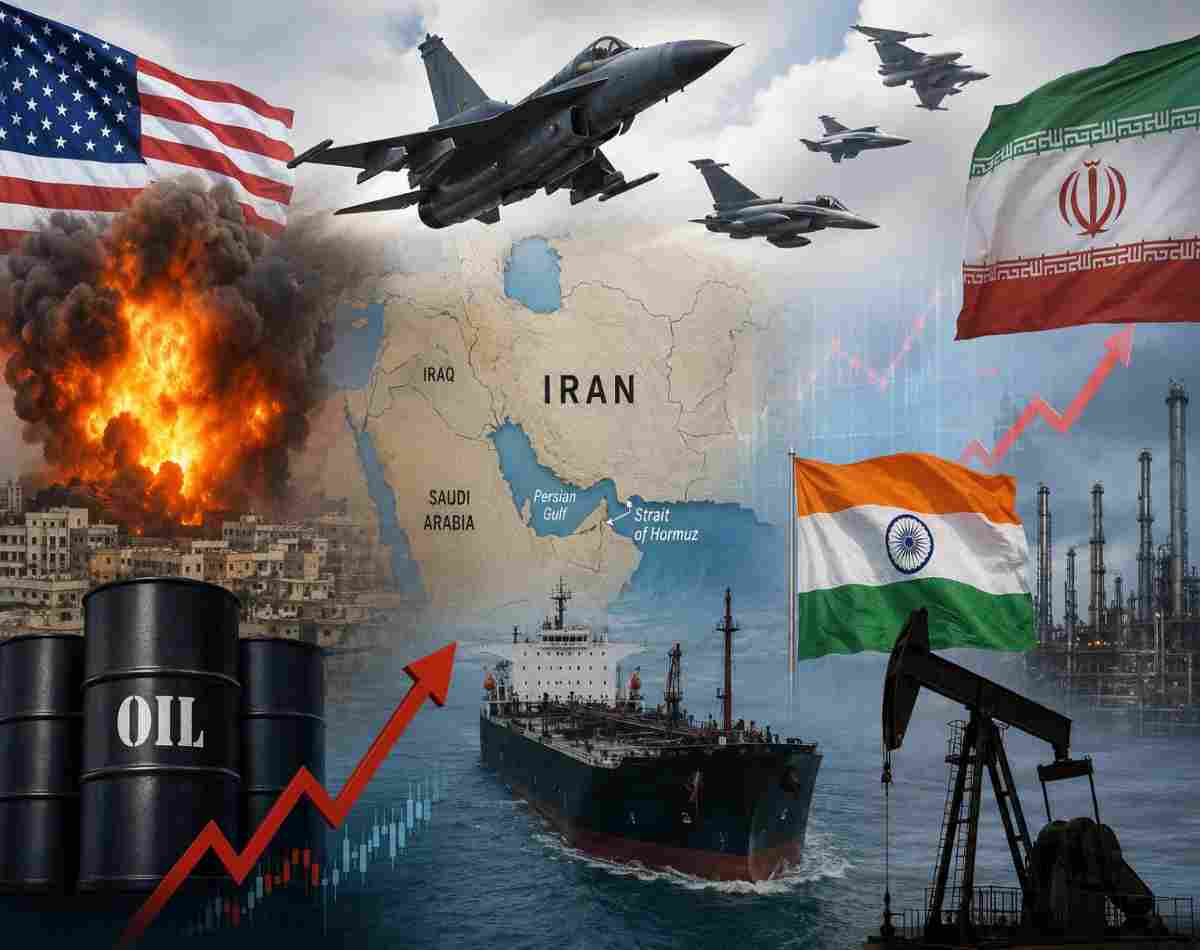
The latest US-Iran tensions have raised concerns over global oil prices, energy security, and their potential impact on India's economy and financial markets.
US Strikes on Iran: What Happened and Why It Matters
The US strikes on Iran have once again brought the Middle East into the global spotlight, raising fears of a wider regional conflict. The latest military action has intensified tensions between the United States and Iran, prompting strong reactions from world leaders, financial markets, and energy experts. As the situation continues to evolve, concerns are growing over its potential impact on global oil supplies, international trade, and economic stability.
For India, the developments are particularly significant because the country imports a large portion of its crude oil from overseas. Any disruption in oil supply from the Middle East could affect fuel prices, inflation, transportation costs, and the overall economy. Investors are also closely watching the situation as global markets react to geopolitical uncertainty.
The conflict is not just a military issue—it has become an economic concern for countries across the world. Rising crude oil prices, increased shipping risks, and fears of supply disruptions have made this one of the most closely followed international stories of the year.
US Strikes on Iran: What Triggered the Latest Confrontation?
The relationship between the United States and Iran has remained tense for decades. Disagreements over Iran’s nuclear program, regional influence, economic sanctions, and military activities have repeatedly pushed both countries toward confrontation.
The latest escalation began after the United States carried out military strikes on targets linked to Iran. American officials described the action as a response to security threats, while Iranian leaders condemned the strikes and warned that they would respond appropriately. These developments have increased fears that the conflict could expand beyond the two countries and affect the wider Middle East. Recent reports also indicate that the tensions have renewed concerns over global energy security and international shipping routes, as reported by Telangana Today.
US Strikes on Iran: Why the World Is Watching Closely
The Middle East plays a critical role in global energy production. Several of the world’s largest oil-producing nations are located in the region, making any military conflict there a matter of international concern.
Whenever tensions increase, financial markets often react immediately because investors fear that oil production or transportation could be disrupted. Such concerns usually lead to higher crude oil prices, increased market volatility, and pressure on economies that rely heavily on imported energy.
The latest developments have once again reminded the world how geopolitical conflicts can quickly influence energy markets, transportation networks, and international trade. Governments, businesses, and investors are therefore monitoring every new update carefully.
Why the Strait of Hormuz Is So Important
One of the biggest concerns surrounding the current crisis is the Strait of Hormuz, one of the world’s most important oil shipping routes. A significant percentage of the world’s crude oil exports passes through this narrow waterway every day. If military tensions disrupt shipping in this region, global oil supplies could be affected almost immediately.
- Higher international crude oil prices
- Increased transportation and shipping costs
- Supply chain disruptions across industries
- Rising fuel prices in many countries
- Greater inflationary pressure on import-dependent economies
Because India imports a large share of its crude oil requirements, any prolonged disruption in the Strait of Hormuz could have a direct impact on the country’s energy costs and economic outlook.
Rising Crude Oil Prices Raise Global Concerns
Energy markets have already begun responding to the increased uncertainty. Oil traders are pricing in the possibility of supply disruptions, which has pushed crude oil prices higher.
Historically, geopolitical tensions in the Middle East have often resulted in short-term spikes in oil prices. Analysts believe that if the conflict escalates further, oil prices could remain volatile in the coming weeks, affecting industries such as aviation, logistics, manufacturing, and transportation. Reports indicate that concerns over supply risks have already contributed to upward pressure on global crude prices.
Why This Matters for India
India is one of the world’s largest importers of crude oil. Although the country has diversified its energy sources over the years, the Middle East remains an important supplier. A sustained increase in crude oil prices could affect:
- Petrol and diesel prices at the pump
- Transportation and logistics costs
- Inflation and consumer purchasing power
- Government subsidy expenditure
- Manufacturing and industrial costs
- Consumer spending and demand
- Overall economic growth trajectory
For this reason, policymakers, businesses, and investors in India are closely following every development in the ongoing US-Iran tensions.
India’s Response to the Escalating Conflict
India has traditionally maintained balanced diplomatic relations with both the United States and Iran. As the latest tensions unfold, New Delhi is expected to closely monitor the situation while emphasizing dialogue, regional stability, and the safety of Indian citizens living in the Middle East.
The Indian government has consistently supported peaceful solutions to international conflicts through diplomacy rather than prolonged military confrontation. Given India’s strategic partnerships with the United States and its longstanding ties with Iran, maintaining a balanced approach remains crucial.
In addition to diplomatic concerns, Indian authorities are monitoring developments that could affect energy supplies, overseas trade, and the welfare of Indian nationals working across Gulf countries.
Why the Conflict Is a Major Concern for India
India is the world’s third-largest consumer of crude oil and imports nearly 85% of its crude oil requirements from international markets. A significant portion of these imports originates from the Middle East. This means any disruption in oil production or shipping routes could directly affect India’s economy.
- Higher crude oil import costs
- Rising transportation expenses
- Increased inflationary pressures
- Pressure on government finances
- Impact on industrial production
- Higher logistics costs across sectors
Even if the conflict remains limited, uncertainty alone can influence international oil prices and investor confidence.
Could Petrol and Diesel Prices Increase?
One of the biggest questions among Indian consumers is whether petrol and diesel prices will rise. Fuel prices in India depend on several factors, including international crude oil prices, exchange rates between the Indian Rupee and the US Dollar, taxes imposed by the Central and State Governments, and refining and transportation costs.
If global crude oil prices continue rising due to prolonged geopolitical tensions, Indian oil marketing companies may eventually face higher import costs. Depending on market conditions and government policy, this could lead to upward pressure on petrol and diesel prices over time. Recent market reports show crude prices have firmed amid renewed concerns over Middle East supply risks.
Impact on Inflation
Higher fuel prices affect much more than just vehicle owners. Transportation plays a critical role in moving goods across the country. When fuel becomes expensive, logistics costs also increase.
As a result, food prices may rise, consumer goods become more expensive, manufacturing costs increase, freight charges go up, airline ticket prices may increase, and overall inflation could move higher. The Reserve Bank of India (RBI) closely watches inflation trends because they influence monetary policy and interest rate decisions.
Stock Market Reaction
Financial markets generally dislike uncertainty. Whenever geopolitical conflicts intensify, investors often shift money toward safer assets like gold or government bonds. Equity markets can experience increased volatility as investors reassess risks.
In India, sectors that could face pressure include aviation, paint manufacturers, chemical companies, logistics firms, and auto manufacturers. These industries depend heavily on fuel or petroleum-based raw materials. On the other hand, some energy companies and oil producers could benefit if higher crude prices improve their revenues. Market experts believe investor sentiment will largely depend on how long the conflict continues and whether it disrupts global energy supplies.
Impact on the Indian Rupee
Geopolitical uncertainty often strengthens the US Dollar because investors consider it a relatively safe asset during periods of global risk. A stronger Dollar can weaken the Indian Rupee. If the Rupee depreciates, oil imports become more expensive, import bills increase, inflationary pressure may rise, and foreign investment flows could become more volatile. Currency movements are therefore another important factor policymakers will monitor during this period.
Energy Security Becomes a Priority
The current crisis also highlights the importance of India’s long-term energy security strategy. Over the past few years, India has worked to diversify crude oil imports, expand strategic petroleum reserves, increase renewable energy production, promote electric vehicles, and improve domestic energy efficiency. These initiatives help reduce dependence on any single region and strengthen resilience against international supply shocks.
Global Reactions to the US–Iran Conflict
According to BigTV, the strikes have drawn widespread international attention.
The latest US strikes on Iran have drawn attention from governments and international organizations across the world. Many countries have expressed concern over the possibility of the conflict expanding into a wider regional crisis. Several nations have urged both the United States and Iran to exercise restraint and avoid actions that could further destabilize the Middle East. International leaders continue to emphasize diplomacy and dialogue as the best path to reduce tensions and protect global security.
Countries that depend heavily on Middle Eastern oil are also closely monitoring developments because any disruption in energy supplies could affect economic growth worldwide.
US Strikes on Iran: Impact on Global Trade
The Middle East is one of the world’s most important regions for energy exports. If tensions continue to rise, global trade could face several challenges.
- Higher shipping insurance costs
- Delays in cargo movement
- Increased transportation expenses
- Rising import and export costs
- Pressure on global supply chains
Many multinational companies rely on stable shipping routes for the movement of crude oil, natural gas, and other essential commodities. Even temporary disruptions can increase costs for businesses and consumers around the world.
What Could Happen Next?
Experts believe the situation may develop in several different ways.
Scenario 1: Diplomatic Resolution
The most positive outcome would be renewed diplomatic talks between the two countries. If negotiations succeed, military tensions could decrease, oil prices may stabilize, global markets could recover, and investor confidence may improve.
Scenario 2: Limited Military Response
Another possibility is a limited exchange of military actions without escalating into a full-scale war. Under this scenario, oil prices may remain volatile, financial markets could continue to fluctuate, and regional security concerns would persist.
Scenario 3: Wider Regional Conflict
The most serious scenario would involve a broader regional conflict affecting multiple countries. Such a situation could result in sharp increases in crude oil prices, major disruptions in global shipping, higher inflation worldwide, increased pressure on global financial markets, and slower economic growth.
At present, analysts say it is too early to predict which outcome is most likely, as developments continue to change rapidly.
Expert Analysis
Economic experts believe that the biggest risk is not only military escalation but also prolonged uncertainty. History shows that prolonged geopolitical conflicts often create uncertainty in financial markets. Investors typically move toward safe-haven assets such as gold, the US Dollar, and government bonds. Meanwhile, stock markets often experience higher volatility until the geopolitical situation becomes clearer. Energy analysts also note that crude oil prices are highly sensitive to developments in the Middle East because the region remains a key supplier of global energy.
How Should Indian Consumers Respond?
For ordinary citizens, there is no immediate need to panic. However, consumers should keep track of official fuel price announcements, avoid believing unverified social media rumours, follow updates from reliable news sources, and monitor financial planning if fuel prices rise over time. Businesses that depend heavily on transportation may also consider reviewing logistics costs if crude oil prices remain elevated for an extended period.
Frequently Asked Questions
About the Author