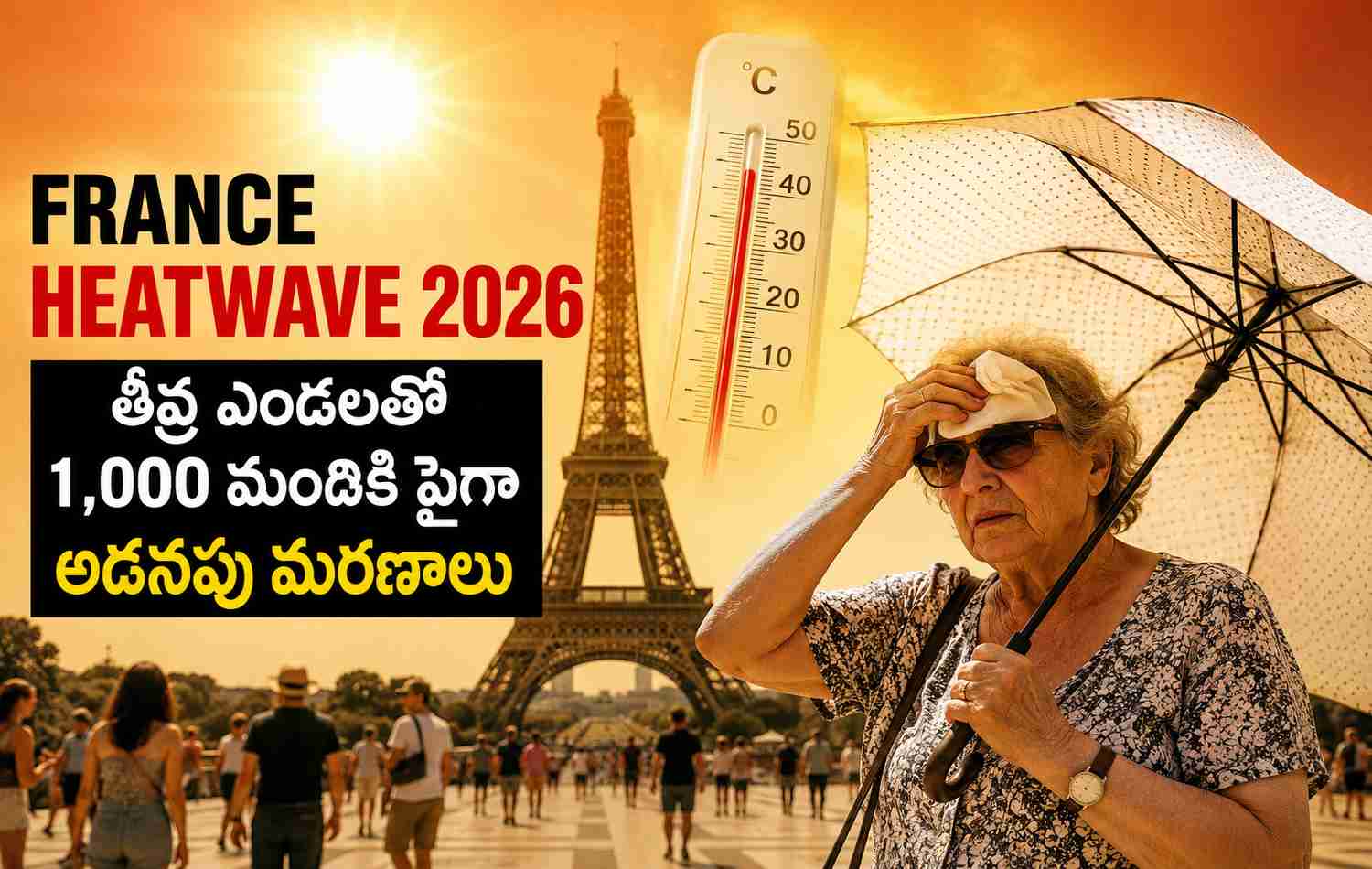
🔥 France Heatwave Crisis 2026: 1,000+ Excess Deaths, Severe Impact on Elderly Population
Europe is once again gripped by an extreme heatwave. Temperatures in France have crossed 40°C, leaving thousands facing health emergencies. Reports confirm over 1,000 excess deaths, with the elderly being the most affected group.
France Heatwave Crisis 2026: Rising global temperatures have once again triggered deep concern across the world. France is experiencing one of the most severe heatwaves in its recorded history. Over the past week, temperatures across multiple regions have exceeded 40°C. Major cities including Paris, Lyon, Marseille, Toulouse, and Bordeaux are facing the worst conditions. According to French health ministry officials, more than 1,000 excess deaths have been recorded during this extreme heat event.
- 1,000+ excess deaths compared to normal periods
- 40°C+ temperatures in Paris, Lyon, Marseille, Toulouse, Bordeaux
- 65% of deaths among 65+ age group – elderly hit hardest
- 3,200+ hospitalizations due to heat stroke and dehydration
- 20+ regions on RED alert, 50+ on ORANGE alert
- Thousands seeking shelter in cooling centers
France Heatwave Record Temperatures – Major Cities Status
France, along with several European countries, is experiencing extreme heat this summer. Temperatures are 10-12°C above normal seasonal averages. According to Météo-France records, this is the most severe heatwave in the last 70 years, surpassing even the devastating heatwaves of 2003, 2019, and 2022. The current conditions have broken multiple historical records across the country.
Paris recorded 42.3°C, breaking the previous record of 42.0°C from July 2019. Lyon hit 41.8°C, Marseille 40.5°C, Toulouse 41.2°C, and Bordeaux 40.8°C. Rural areas of France are also recording temperatures between 37-40°C. Other European countries including Spain, Italy, Germany, Belgium, and the Netherlands are also experiencing severe heatwave conditions.
France Heatwave Causes 1,000+ Excess Deaths – Full Analysis
According to the latest report by the French Health Ministry, more than 1,000 excess deaths have been estimated during the heatwave period compared to normal days. These deaths are directly and indirectly attributed to the extreme heat. This represents approximately a 23-28% increase in mortality rate. Health officials warn that the numbers may rise as more data is collected and analyzed.
| Age Group | Death % | Primary Causes | Risk Level |
|---|---|---|---|
| 65+ years | 65% | Heat stroke, heart attack, dehydration | 🔴 Extreme Risk |
| 45-64 years | 22% | Cardiac issues, respiratory problems | 🟠 High Risk |
| 15-44 years | 9% | Dehydration, heat exhaustion | 🟡 Caution |
| 0-14 years | 4% | Dehydration, elevated body temperature | 🟡 Caution |
Experts say the increase in deaths is linked to rising body temperatures, dehydration, cardiovascular complications, and respiratory issues caused by the extreme heat. Those with pre-existing health conditions face even greater risks. Officials stress that this is not the final figure and may change as further details emerge.
Main Causes Behind the Deaths
- Heat Stroke: Body temperature exceeding 40°C. This is a life-threatening condition that can damage the brain, heart, kidneys, and muscles.
- Dehydration: Loss of water and essential salts from the body leading to low blood pressure and kidney failure.
- Cardiovascular Issues: Increased strain on the heart due to extreme heat, raising the risk of heart attacks and strokes.
- Respiratory Problems: Rising air pollution and ozone levels worsen lung conditions.
Heatwave Impact on Elderly – The Most Vulnerable Group
The elderly have been disproportionately affected by the extreme heat. According to French health statistics, 65% of all excess deaths occurred among those aged 65 and above. As age increases, the body’s ability to regulate temperature decreases significantly. Sweat glands in older adults function less efficiently, reducing the body’s capacity to cool itself. This makes seniors more susceptible to dehydration, heat stroke, and related complications.
Elderly people living alone are at even greater risk. Approximately 2 million senior citizens in France live alone, many without air conditioning. Those with diabetes, heart disease, high blood pressure, or lung conditions have been advised to take extra precautions. The French government has set up special helplines and cooling centers specifically for the elderly population.
Rising Pressure on Hospitals – Emergency Services on High Alert
The number of patients in French hospitals has surged dramatically due to the extreme heat. Over the past week, more than 3,200 people were admitted with heat-related illnesses. Heat stroke, respiratory issues, cardiac problems, dehydration, and kidney failure have driven thousands to seek medical care. In major hospitals across Paris, Lyon, and Marseille, emergency department visits have increased by 40-50%.
Emergency services (SAMU) remain on high alert with additional ambulances and medical staff deployed. Many hospitals have postponed elective surgeries to prioritize emergency care. Temporary medical camps and cooling centers have been established. The French Health Minister has declared an emergency plan, placing all hospitals on high alert status.
France Heatwave Official Warnings – Alert Levels
Météo-France has issued RED alerts (highest level) for 20 regions and ORANGE alerts for 50 regions. In RED alert zones, schools and offices remain closed. Authorities urge people not to go outside unless absolutely necessary. Public transport services have been reduced. Tourist attractions including the Eiffel Tower and Louvre Museum in Paris have been temporarily closed.
- Do not go outside between 12 PM and 4 PM – the most dangerous period
- Drink water every 30 minutes even if not thirsty
- Keep rooms cool – close windows and curtains during the day
- Check on elderly and sick family members at least twice daily
- Avoid alcohol and caffeine consumption
- Cool your body with a damp cloth regularly
- Dial 112 immediately if you experience dizziness, vomiting, or loss of consciousness
Heat Stroke Symptoms – Identify Immediately
- Body temperature above 40°C
- Red, hot, and dry skin (no sweating)
- Severe headache and dizziness
- Rapid heartbeat and difficulty breathing
- Confusion, loss of consciousness, seizures
- Call 112 immediately
- Move the person to a cool area
- Pour cool water on the body or apply ice packs
- Use a fan or air conditioner
- If conscious, give cool water to drink
- Do not leave the person alone until medical help arrives
French Government Actions – Emergency Plans
The French government has launched extensive measures to protect its citizens. President Emmanuel Macron tweeted: “The safety of our citizens is our top priority. All resources have been mobilized.” Key government actions include:
| Action | Details | Beneficiaries |
|---|---|---|
| Cooling Centers | 1,200+ centers established nationwide | General public |
| Helpline | Canicule Info Service – 0800 06 66 66 | Elderly, patients, general public |
| Elderly Registry | Identifying and assisting isolated seniors | 65+ living alone |
| School Closures | Schools closed in RED zones | Students, teachers |
| Power Supply | Additional power generation and grid management | All households, hospitals |
| Parks/Gardens | Keeping public parks open overnight | People seeking cool spaces |
Special programs have been launched to identify and assist the elderly and those with health conditions. Local municipalities are conducting home visits to monitor the health of senior citizens. Hospitals have prepared additional beds, ventilators, and cooling equipment.
Europe’s Growing Heatwave Problem – Timeline
France is not alone. Several European countries have been facing extreme heat with increasing frequency. In 2003, Europe’s historic heatwave claimed over 70,000 lives. Since then, similar conditions have recurred every few years. Scientists warn that climate change and global warming are driving temperatures higher year after year.
Extreme heat events that were once rare are now becoming frequent. According to the European Union’s Copernicus Climate Service, 2026 could go down as the hottest summer in recorded history. Scientists attribute this primarily to human activities and fossil fuel consumption that have increased carbon dioxide levels in the atmosphere.
Another Warning on Climate Change – Future Projections
The France heatwave is yet another reminder of the impact of climate change worldwide. According to the European Environment Agency (EEA), heat-related deaths in Europe could exceed 90,000 per year by 2050. Both the frequency and intensity of heatwaves are increasing. Beyond extreme temperatures, droughts, wildfires, and heavy rainfall events are also becoming more common.
Heatwave Safety Guide – Complete Precautions
During a heatwave, everyone must follow basic safety measures. Here are the guidelines recommended by the French Health Ministry and the World Health Organization (WHO):
- Avoid going out between 12 PM and 4 PM – the most dangerous time
- Drink water every 30-45 minutes even if you don’t feel thirsty
- Visit a cooling center if you don’t have air conditioning at home
- Wear loose, light-colored cotton clothing
- Avoid alcohol, caffeine, and sugary drinks – they worsen dehydration
- Never leave children or pets inside parked vehicles
- Take cool showers at least twice a day
- Close windows and curtains to keep indoor temperatures down
- Check on elderly and sick relatives multiple times a day
- Keep emergency numbers handy (112 – Europe Emergency)
The Message from France Heatwave to the World
The heatwave in France is not just one country’s problem. It is a clear example of the growing impact of climate change globally. Rising temperatures are affecting public health, economies, agriculture, and infrastructure. This year, countries including Spain, Italy, Greece, Turkey, Germany, and Portugal are also battling severe heatwave conditions.
Nations need to prepare advance plans to tackle such situations in the future. Long-term measures including urban planning changes, expansion of green spaces, and construction of energy-efficient buildings are essential to reduce heatwave risks. With the impact of climate change intensifying, public awareness and stronger government action have become critical.
- Increase green spaces and tree cover in cities – these reduce temperatures
- Use white or reflective paint on buildings
- Strengthen heatwave alert systems further
- Develop special programs for the elderly and other vulnerable groups
- Reduce fossil fuel usage and transition to renewable energy
- Implement climate change adaptation plans
- Educate the public about heatwave risks and safety measures
Frequently Asked Questions
Conclusion
France Heatwave Crisis 2026 has become a major topic of discussion worldwide. Record temperatures of 42.3°C in Paris, over 1,000 excess deaths, and 3,200+ hospitalizations once again prove the severity of climate change. The elderly, those with health conditions, and young children remain the most vulnerable groups during this heatwave.
Governments, organizations, and individuals must take collective action to combat climate change. Personal precautions, community awareness, and policy-level interventions must happen simultaneously. Climate change is no longer a distant threat – it is at our doorstep. Everyone must stay vigilant and work towards protecting our environment.
About the Author







1 thought on “France Heatwave Crisis 2026: 1,000+ Excess Deaths”